
ADU Incentive Program
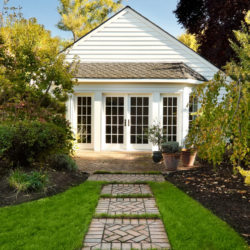
The Accessory Dwelling Unit (ADU) Incentive Program is a statewide initiative administered by the Massachusetts Housing Partnership (MHP) in collaboration with the Executive Office of Housing and Livable Communities (EOHLC) to promote ADU construction by providing outreach and education, along with technical and financial assistance to eligible property owners looking to construct an ADU on their property. The program is designed to help homeowners evaluate and advance ADU projects while supporting broader housing, policy, and market goals across Massachusetts.
Phase One of the ADU Incentive Program is currently expected to launch in Spring 2026. The initial phase will focus on helping homeowners get started by providing access to professional feasibility studies.
What is an ADU?
An ADU is a small residential living space located on the same lot as another home. ADUs can be inside an existing home, like converting a basement into an apartment, attached to a primary residence as an addition, or completely detached, like a cottage or converted garage in a backyard.
They can provide flexible housing options for families, caregivers, renters, and communities. Section 8 of the Affordable Homes Act amends the Zoning Act (M.G.L. c. 40) to allow ADUs up to 900 square feet to be built by right in single-family zoning districts. To learn more about the law and other frequently asked questions, go to Accessory Dwelling Units | Mass.gov.
Phase One: Feasibility Studies for Homeowners
In Phase One, MHP will contract with qualified Feasibility Study Providers (FSPs) to assist interested homeowners. These studies are intended to help homeowners understand whether an ADU is feasible on their property and what would be involved if they choose to move forward.
Feasibility studies will generally assess:
- Site conditions and constraints
- Local zoning and permitting considerations
- Utilities (water, sewer, and energy)
- Preliminary design considerations
- High-level cost and budget feasibility
Participation in a feasibility study does not obligate a homeowner to build an ADU.
Approved Feasibility Study Providers
MHP is in the process of procuring and approving qualified Feasibility Study Providers through a formal Request for Qualifications (RFQ). Once Phase One launches, MHP will publish and maintain a list of approved Feasibility Study Providers for homeowners to reference when getting started.
This list will be posted on this page once available.
Program Status
- Expected launch of Phase One (Feasibility Studies): Spring 2026
- Geographic scope: Statewide
- Additional program phases and incentives may be introduced in the future.
How the ADU Incentive Program will assist Key Stakeholders
Homeowners
- Learn whether an ADU is feasible on your property
- Receive early guidance on zoning, design, and costs
- Make informed decisions before committing significant resources
Policymakers
- Support the responsible expansion of ADUs statewide
- Encourage housing production while respecting local context
- Leverage standardized feasibility assessments to inform policy decisions
Lenders
- Benefit from clearer early-stage project information
- Support borrowers with more predictable project scopes and costs
Builders and Designers
- Engage with better-prepared homeowners
- Reduce uncertainty during early project discussions
Real Estate Professionals and Others
- Understand how ADUs may factor into property use and value
- Stay informed about emerging statewide ADU support infrastructure
Contact Information
To learn more and receive updates about the program, please fill out the interest form at ADU Incentives Program | Mass.gov.
For general questions about the ADU Incentive Program, please contact the Massachusetts Housing Partnership by email.
Please note that more information will be added to this page as the program launches.